

If you’re searching for the best Pentatonic Scale for Beginners guide, you’ve come to the right place. Learning the pentatonic scale is one of the fastest ways to improve your guitar solos, understand the fretboard, and build confidence as a new guitarist. Whether you love blues, rock, or country music, this simple five-note scale can transform the way you play.
Have you ever wondered why so many famous guitar solos sound powerful, emotional, and effortless?
The secret isn’t learning dozens of complicated scales—it’s mastering one of the simplest and most versatile scales in music: the pentatonic scale.
If you’re searching for the Pentatonic Scale for Beginners, you’re already on the right path. Whether you want to play blues, rock, country, or modern lead guitar, this scale gives you a solid foundation without overwhelming you with complex music theory.
In this guide, you’ll learn what the pentatonic scale is, why every beginner should master it first, how to practice it correctly, and the common mistakes that stop many guitarists from improving. By the end, you’ll have a clear roadmap to start creating smoother, more confident guitar solos.
What Is the Pentatonic Scale for Beginners?
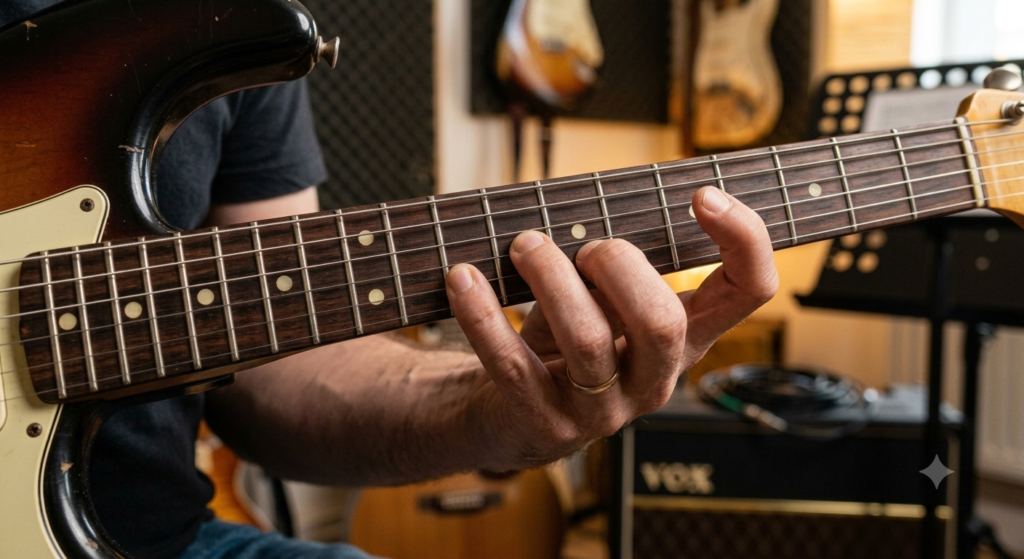
The word pentatonic literally means “five notes.”
Unlike major and minor scales, which contain seven notes, the pentatonic scale uses only five carefully chosen notes that sound naturally pleasing together.
Because there are fewer notes to think about, beginners can focus on rhythm, phrasing, bends, and timing instead of worrying about hitting “wrong” notes.
This is exactly why countless professional guitar teachers recommend learning the pentatonic scale before moving to more advanced scales.
You’ll hear it in songs by legends like Eric Clapton, Slash, B.B. King, John Mayer, David Gilmour, Jimmy Page, and many more.
No matter what genre you enjoy, chances are the pentatonic scale plays a major role.
Why the Pentatonic Scale Is the Best Scale for Beginners
Many beginners try to learn advanced guitar theory too early.
They jump into modes, exotic scales, or difficult solos before building a strong foundation.
Unfortunately, this often leads to frustration.
Learning the pentatonic scale first offers several advantages:
- Easy to memorize compared to larger scales
- Perfect for blues, rock, country, and pop music
- Improves finger coordination
- Builds confidence while improvising
- Helps you understand the guitar fretboard
- Makes learning future scales much easier
Instead of feeling overwhelmed, you’ll start making music much sooner.
That early success keeps beginners motivated to continue practicing.
Pentatonic Scale vs. Major and Minor Scales
One of the most common beginner questions is:
Should I learn the pentatonic scale before major and minor scales?
For most players, the answer is yes.
The pentatonic scale removes two notes that often create tension for beginners.
That makes it much easier to improvise without worrying about clashing notes.
Once you’re comfortable with pentatonic patterns, transitioning to full major and minor scales becomes much more natural.
Think of the pentatonic scale as your guitar vocabulary.
Before writing long sentences, you first need to learn simple words.
The same principle applies to guitar.
The Biggest Mistake Beginners Make When Learning the Pentatonic Scale
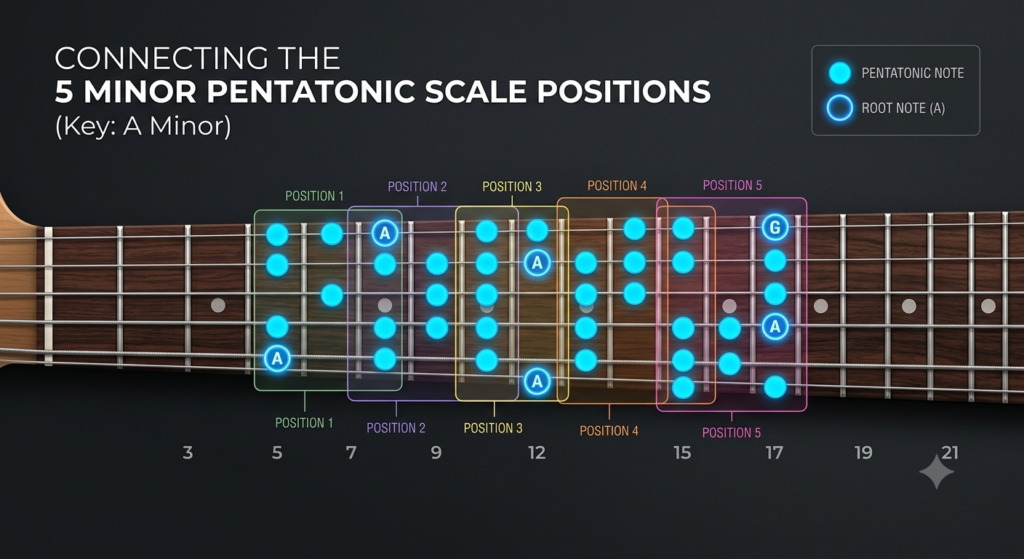
Most beginners believe learning the pentatonic scale simply means memorizing one shape.
Unfortunately, that’s where progress often stops.
Many players spend years playing the exact same box pattern without understanding how the scale connects across the fretboard.
As a result:
- Their solos sound repetitive.
- Improvisation feels difficult.
- Moving outside one position becomes uncomfortable.
- They rely on muscle memory instead of musical understanding.
The goal isn’t just learning a pattern.
The goal is learning how to use the pattern musically.
Start With Position One
Don’t rush into learning all five pentatonic positions in one weekend.
Instead, master Position One first.
Practice until you can:
- Find every root note
- Play slowly without mistakes
- Create simple melodic phrases
- Add bends and vibrato naturally
- Jam comfortably with a backing track
Once Position One feels natural, connecting the remaining positions becomes much easier.
How to Practice the Pentatonic Scale the Right Way
Learning the pentatonic scale isn’t about practicing for hours every day. It’s about practicing with purpose.
Many beginners repeat the same pattern over and over without understanding how to apply it in real music. That’s why they stop improving after a few weeks.
Instead, follow these simple steps.
1. Practice Slowly Before Playing Fast
One of the biggest mistakes beginners make is trying to play as fast as their favorite guitarists.
Speed comes later.
Accuracy comes first.
Start with a slow tempo using a metronome. Focus on clean notes, smooth finger movement, and consistent timing.
When you can play the scale perfectly at a slow speed, gradually increase the tempo.
Remember:
Slow practice builds perfect muscle memory.
2. Learn the Notes, Not Just the Shape
Many guitarists memorize finger positions but never learn which notes they’re actually playing.
Understanding the notes helps you:
- Build better solos
- Find root notes quickly
- Understand chord changes
- Navigate the fretboard with confidence
Instead of thinking,
“Finger 1… Finger 3… Finger 4…”
Start thinking,
“Root note… Minor third… Fourth… Fifth…”
This small change makes a huge difference over time.
3. Practice With Backing Tracks
The fastest way to improve your guitar playing is to make music—not just practice exercises.
Find a simple backing track in A Minor or E Minor and begin creating short musical ideas.
Don’t worry about sounding perfect.
Focus on:
- Good rhythm
- Short phrases
- Bends
- Vibrato
- Expression
Even five notes can create amazing solos when played with feeling.
4. Learn to Connect Positions
Eventually you’ll notice something.
The fretboard isn’t made of separate boxes.
Every pentatonic position connects naturally to the next.
Instead of memorizing isolated patterns, begin looking for overlapping notes between positions.
This is where many beginners experience their biggest breakthrough.
If you’d like a structured system that explains how to connect every position without confusion, read our complete Best Minor Pentatonic Course guide:
👉 https://productreviewarena.com/best-minor-pentatonic-course/
It explains the course content, learning method, pricing, refund policy, and who it’s best suited for.
20-Minute Daily Practice Routine to Master the Pentatonic Scale
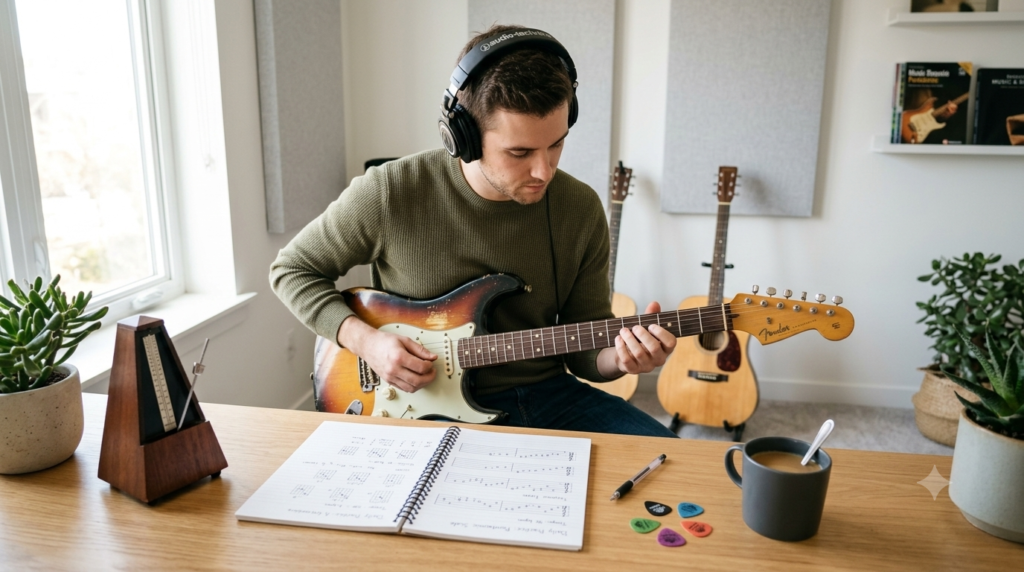
You don’t need three hours every day.
Consistency beats intensity.
Try this simple routine.
5 Minutes
Warm-up exercises
- Finger stretches
- Alternate picking
- Basic chromatic exercises
5 Minutes
Practice Position One
Play slowly.
Focus on clean tone and timing.
5 Minutes
Jam With a Backing Track
Forget exercises.
Play music.
Experiment with bends, slides, and pauses.
5 Minutes
Create Your Own Solo
Challenge yourself to create small musical phrases instead of running the scale from top to bottom.
This develops creativity much faster.
Benefits of Learning the Pentatonic Scale
Every guitarist starts somewhere.
The pentatonic scale gives beginners several advantages that make future learning much easier.
Faster Soloing Skills
Instead of memorizing dozens of complicated notes, you’ll have a practical framework for creating musical ideas.
Better Fretboard Knowledge
As you practice regularly, you’ll naturally begin recognizing note locations and connecting different positions.
Improved Finger Coordination
Playing scales improves dexterity, finger strength, and picking accuracy.
More Musical Confidence
You’ll stop guessing and start playing with purpose.
Even simple solos begin sounding professional when played confidently.
Easier Transition to Advanced Guitar Playing
Once you’ve mastered the pentatonic scale, learning blues scales, major scales, modes, and advanced improvisation becomes much easier.
Common Mistakes Every Beginner Should Avoid
Many players waste months because of a few simple mistakes.
Avoid these habits.
Memorizing Without Understanding
Don’t just memorize shapes.
Understand how the notes relate to one another.
Practicing Too Fast
Fast practice usually creates sloppy technique.
Clean playing should always come first.
Never Playing Along With Music
Music is meant to be played—not just practiced.
Use backing tracks regularly.
Ignoring Rhythm
Great rhythm often matters more than fast fingers.
Practice with a metronome whenever possible.
Staying in One Position Forever
Many beginners never leave Position One.
Eventually, you’ll need to connect all five positions to unlock the full fretboard.
Want to Improve Even Faster?
If you’ve already learned the basics but still struggle to move around the neck confidently, a structured learning system can save you months of frustration.
Our detailed guide explains everything you need to know before investing in the course.
👉 Read the complete Best Minor Pentatonic Course guide
You can also read our complete beginner guide:
👉 How to Learn the Minor Pentatonic Scale
Ready to Take the Next Step?
If you’re serious about mastering the fretboard and improving your lead guitar skills, you can explore the official course here:
Frequently Asked Questions About the Pentatonic Scale for Beginners
Yes. The pentatonic scale is one of the easiest and most practical scales for new guitar players. With only five notes, it’s simple to memorize and works well in blues, rock, country, pop, and many other styles.
Most beginners can learn the first pentatonic position within a few days. Becoming comfortable with all five positions and using them naturally in solos usually takes a few months of regular practice.
For most beginners, the minor pentatonic scale is the best place to start because it’s widely used in rock, blues, and lead guitar. Once you’re confident with the minor pentatonic, learning the major pentatonic becomes much easier.
Absolutely. Many legendary guitar solos are built almost entirely around the pentatonic scale. Great phrasing, bends, vibrato, and rhythm often matter more than using lots of different scales.
A focused 20–30 minutes each day is enough for most beginners. Consistent daily practice is far more effective than practicing for several hours only once a week.
The most common mistake is memorizing scale shapes without understanding how they connect across the fretboard. Learning musical phrasing and connecting positions will help you progress much faster.
Final Thoughts
Learning the Pentatonic Scale for Beginners is one of the smartest decisions you can make as a guitarist.
It gives you the confidence to improvise, understand the fretboard, and create musical solos without feeling overwhelmed by complicated music theory.
Remember, every great guitarist started with the basics.
Don’t rush through all five positions.
Master one position, practice consistently, play along with backing tracks, and gradually connect the entire fretboard.
Small improvements every day will lead to big results over time.
Continue Your Guitar Journey
If you found this guide helpful, these articles are the perfect next step.
📖 Best Minor Pentatonic Course
Learn how to connect all five pentatonic positions, explore the course features, pricing, and discover whether it’s worth your investment.
👉 https://productreviewarena.com/best-minor-pentatonic-course/
📖 How to Learn the Minor Pentatonic Scale
Want a complete step-by-step roadmap for learning the minor pentatonic scale? Read our detailed beginner guide packed with practical tips and exercises.
👉 https://productreviewarena.com/how-to-learn-the-minor-pentatonic-scale/
Ready to Improve Your Guitar Solos?
If you’re ready to stop feeling stuck in one position and want a structured system to improve your lead guitar skills, check out the official course below.
Final Tip for Beginners
Don’t compare yourself to professional guitarists.
Compare yourself to the guitarist you were yesterday.
Even learning one new phrase, one smooth bend, or one connected position each week is real progress.
Stay patient, enjoy the process, and keep playing.
1 thought on “Pentatonic Scale for Beginners: The Easy Guide to Playing Better Guitar Solos”