


In this VIN Checkup review, we’re taking an honest look at one
of the most affordable vehicle history report services available
in 2026 — covering what it does, how accurate the data is, real
user feedback, Carfax comparison, and who should actually use it.
In this VIN Checkup review — part of our Software Reviews coverage
— we’ll cover what it actually does, how accurate the data is, what
real users say (including the complaints), how it compares to Carfax,
and who it’s genuinely a smart pick for.
That’s exactly the problem VIN Checkup promises to solve: a fast, affordable vehicle history report that helps you screen a used car’s background before you commit to buying it.
In this VIN Checkup review, we’ll cover what it actually does, how accurate the data is, what real users say (including the complaints), how it compares to Carfax, and who it’s genuinely a smart pick for — and who should look elsewhere.
What Is VIN Checkup?
VIN Checkup is an online vehicle history reporting service. You enter a car’s VIN (Vehicle Identification Number), pay a small fee, and receive a detailed PDF report pulling data from government databases — primarily the National Motor Vehicle Title Information System (NMVTIS) — along with insurance and accident records.
The service is available at vincheckup.com, accessible from any browser or mobile device, and reports are delivered instantly after purchase.
It’s positioned as a budget-friendly alternative to Carfax — typically priced at roughly half of what Carfax charges for a single report — making it appealing to shoppers who want to screen multiple listings without spending $40+ per report.
How It Works
Using VIN Checkup is straightforward:
- Locate the VIN — found on the dashboard near the windshield, on the driver’s side door jamb, or on your title/registration documents
- Enter it on vincheckup.com — the site runs an instant preview before you pay
- Purchase a report — single report or a bundle pack at a lower per-report cost
- Download your PDF — the report is available immediately
The report pulls from government and insurance data sources and covers:
- Title status (clean, salvage, flood, rebuilt, lemon law)
- Accident history (reported incidents with dates and severity indicators)
- Odometer readings and rollback alerts
- Theft records
- Lien checks
- Ownership history
- Recall information
Key Features
- Instant delivery — report available as soon as payment is processed
- PDF format — clear, scannable layout with a timeline view
- 60+ title brand checks — salvage, flood, fire, hail, junk, lemon, and more
- NMVTIS data — pulls from a federally-mandated national database
- Multi-report packs — bundles for shoppers screening several vehicles
- Mobile-friendly — works on any device, no app required
- Refund policy — incomplete reports are eligible for a refund
VIN Checkup Pricing (2026)
| Package | Price | Per Report |
|---|---|---|
| Single Report | $19.95 | $19.95 |
| 3-Report Bundle | $29.95 | ~$9.98 |
| 10-Report Pack | $49.95 | ~$4.99 |
For comparison, Carfax typically charges around $44.99 for a single report — meaning VIN Checkup’s single report costs less than half that, and the 10-pack brings it down to under $5 per report.
Note: Pricing can change with promotions. Always confirm the current price on the official VIN Checkup site before purchasing.
Pros and Cons of VIN Checkup
| Pros | Cons |
|---|---|
| Significantly cheaper than Carfax — up to 55% less per report | Data can be outdated or incomplete on some vehicles |
| Instant delivery, easy-to-read PDF format | Some users report missing accident data that was confirmed elsewhere |
| Covers 60+ title brands including flood, salvage, and hail | Customer support response times are inconsistent per user reviews |
| NMVTIS government database as the data source | Doesn’t always capture private repairs or unreported incidents |
| Multi-report packs offer excellent value for shoppers screening multiple cars | Not a substitute for a physical inspection by a qualified mechanic |
| Works on mobile, no download required | Report accuracy varies by vehicle and data availability in the region |
What Do Real Users Say About VIN Checkup?
For this VIN Checkup review, we looked at real user feedback —
and honest answer: reviews are genuinely mixed, and it’s important
to know this before buying.
Positive feedback tends to come from buyers who used VIN Checkup as a first-pass filter before test-driving — catching title brands, theft records, or obvious red flags on several listings quickly and affordably. For this use case, many found it useful and consider the multi-report packs excellent value.
Negative feedback comes from users who expected Carfax-level comprehensiveness and were disappointed. Specific complaints include:
- Reports showing “no accidents” on vehicles that had confirmed accident history on other platforms
- Odometer data not matching actual readings at time of inspection
- Data appearing outdated (in some cases several years behind current records)
- Customer support being difficult to reach or unhelpful when errors were found
The core takeaway from real user reviews: VIN Checkup is best thought of as an affordable screening tool — not a comprehensive guarantee. It catches a large portion of major title issues (salvage, flood, theft), but it won’t catch everything Carfax catches, and it won’t catch unreported private damage at all.
VIN Checkup vs Carfax: How Do They Compare?
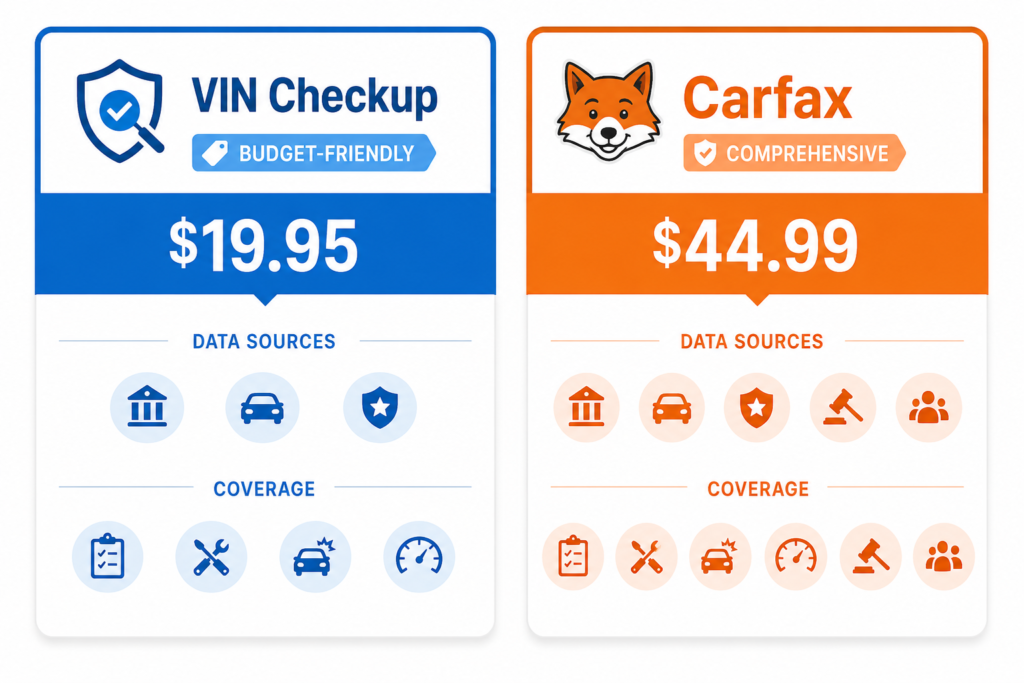
| Feature | VIN Checkup | Carfax |
|---|---|---|
| Price (single report) | ~$19.95 | ~$44.99 |
| Data sources | NMVTIS + insurance | 100,000+ sources |
| Title brand coverage | 60+ brands | Extensive |
| Service records | Limited | More comprehensive |
| Canadian coverage | Limited | Strong |
| Best for | Budget screening, multiple listings | Single comprehensive pre-purchase check |
Bottom line: Carfax has more data sources and more comprehensive service records. VIN Checkup wins on price — significantly. For buyers on a budget or shopping multiple listings, VIN Checkup works well as a first filter. For a single high-stakes purchase (especially expensive cars), the extra cost of Carfax may be worth it — and ideally you’d combine any VIN report with a pre-purchase inspection by a mechanic.
Who Should Use VIN Checkup?
Based on this VIN Checkup review and real user feedback,
it makes the most sense for:
- Budget-conscious used car shoppers who want to screen multiple listings without paying $40+ per report
- Buyers doing early-stage research — filtering out obvious red flags before narrowing down to 1-2 vehicles for a serious inspection
- People shopping in private party markets where sellers may not provide history reports upfront
- Flippers or dealers who check many vehicles and need a cost-effective first-pass tool
It’s probably not the right choice if:
- You’re buying an expensive vehicle and want the most comprehensive report available (consider Carfax or AutoCheck)
- You’re relying on it as your only verification method — always pair any VIN report with a physical mechanic inspection
How to Use VIN Checkup (Step by Step)
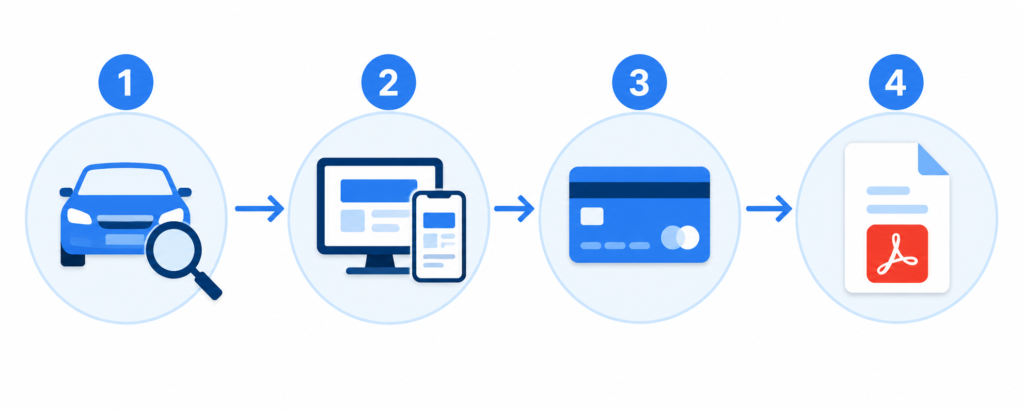
- Locate the VIN on the vehicle (dashboard near windshield, driver’s door jamb, or title documents)
- Go to vincheckup.com and enter the VIN in the search bar
- Review the free preview to see what data is available before paying
- Choose a single report or bundle based on how many vehicles you’re screening
- Download your PDF report instantly after payment
- Cross-reference the key findings — especially title status and accident history — with the seller, and follow up with a mechanic inspection on any vehicle you’re seriously considering
Final Verdict: Is VIN Checkup Worth It in 2026?
To wrap up this VIN Checkup review: it’s a legitimate, functional
vehicle history report service — not a scam.
It’s not a perfect tool — data gaps and occasional inaccuracies are real, documented issues based on user reviews. It also won’t replace a proper mechanic inspection for anything beyond flagging major reported issues.
Used correctly — as an affordable first-pass screening tool, not a comprehensive guarantee — it’s a genuinely useful service that can save you money and time by eliminating obvious problem vehicles early in your search.
For more honest software and tool reviews, check out our
Software Reviews section.
Frequently Asked Questions
It’s generally reliable for title brands (salvage, flood, theft) since it pulls from NMVTIS, a federally-mandated database. However, some users report gaps — particularly for accidents that were never reported to insurance, or for data that hasn’t been recently updated. It’s best combined with a physical inspection, not used as a standalone guarantee.
It’s a legitimate, real service — you’ll receive an actual vehicle history report after purchase. The complaints about it typically relate to data completeness and accuracy, not to the service taking money without delivering anything.
Carfax accesses more data sources and is generally more comprehensive, especially for service records and Canadian vehicles. VIN Checkup is significantly cheaper — roughly half the cost for a single report, and as low as ~$5 per report in the 10-pack. For most budget shoppers doing initial screening, VIN Checkup is a reasonable first step.
VIN Checkup offers a refund policy for incomplete reports. Confirm the current refund terms on the official site at the time of purchase, as policies can change.
No account is required for basic report purchases. The process is straightforward: enter VIN, pay, download report.
Free VIN checks typically return only basic specs (make, model, year, engine). VIN Checkup’s paid reports add title status, accident history, theft records, lien information, and odometer data — details that actually matter when evaluating whether to buy a specific vehicle.
Ready to Check Your Vehicle’s History?
If you’re actively shopping for a used car and want a fast, affordable way to screen out obvious problems before visiting or test-driving, VIN Checkup is worth considering — especially if you’re looking at multiple listings at once.
Disclosure: Product Review Arena may earn a commission from links in this article. This review reflects independent research and analysis of publicly available information and user feedback. Always combine any vehicle history report with a professional mechanic inspection before finalizing a used car purchase. Results and data accuracy vary by vehicle.
1 thought on “VIN Checkup Review 2026: Is It Worth It or Should You Use Carfax?”